When someone describes a personal problem by telling a story, they are signaling they want our compassion rather than a solution. When they lay out all the facts analytically, they are signaling they are more interested in a rational conversation than an emotional one.
Page 67
In a nutshell

You know those people who can steer a conversation effortlessly… The ones who make others feel at ease and share what they think… The ones who ask deep questions, and also hear what we are trying to say? How do they do it? In Supercommunicators, Charles Duhigg seeks to answer this, as he unravels the art and science behind successful communication. This book will change the way you think about what to say and how to say it.
Book Club Notes

The first learning book I remember reading was Charles Duhigg’s The Power of Habit. Years later, I still name it as one of the best books I have ever read, and every single habit book I have read since, references it.
Naturally when I saw this new release from him, I HAD TO read it. From page 1, the feelings I had when reading The Power of Habit came tumbling back. He grabs you right away with a story that encapsulates what this book sets out to teach you.
Supercommunicators is a fascinating book with great lessons on communication – something that is relevant to us all. Not only will it teach you how to communicate better, but also how to really listen. One thing that none of us can escape is having hard conversations. As he writes,
Difficult conversations happen all the time. Sometimes they are centered on issues such as race, ethnicity, or gender. Just as frequently, they are challenging in other ways: An employee has performance problems and needs to hear some blunt feedback; a boss is underpaying you and needs to understand your complaints; a spouse has got to change if a relationship is going to survive; an uncle is drinking too much, and you are worried.
This book teaches you how to navigate these kinds of situations and more. To give you a teaser, I’m sharing his guidelines for navigating hard conversations.
Charles Duhigg’s Supercommunicators guidelines for Hard Conversations

Start a conversation by talking about guidelines
Establish the boundaries of the conversation.
Acknowledge discomfort
If it’s a challenging conversation, it’s going to make people uncomfortable and that is okay.
We will make mistakes
Set out with the intent of curiosity and understanding, not perfection.
The goal is to share your experiences and perspectives
Don’t go in with the expectation of changing someone’s mind.
No blaming, shaming or attacks
Speak about your own views and experiences
Don’t generalize or describe what other people think.
Confidentiality is important
People need to feel safe knowing that what they say won’t be repeated.
Respect is essential
Respect each other’s right to be heard even when you disagree.
Sometimes we need to pause
If a conversation is traumatizing or painful it is a signal to stop. Encourage people to go slow, pause or step away.
The power of Charles Duhigg’s writing is how he uses storytelling to convey powerful concepts. By doing so, not only do the contents stick with you but it makes his books so easy to read. A bad or mediocre novel is usually still readable, but a bad learning book can be impossible to get through. If you’ve ever struggled with reading books in this genre, you need to start with a Charles Duhigg book.
Read If

You want to learn how to be a better communicator (and listener).

Rating
Writing – 10/10
Applicability – 10/10
Timelessness – 10/10
Shareability – 10/10
The Nitty Gritty

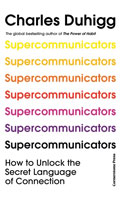
Published by: Penguin Random House
Genre: Non-Fiction, Self Help, Psychology
ISBN: 978-1-8479-4383-5
Pages: 246
Shop This: Takealot, Exclusive Books, Amazon Kindle
Similar Reads



A note on our book ratings
Readability: How easy is it to read and understand what the author is saying? Do you need a dictionary or PhD to understand it?
Writing: How well written is the book? Do you find yourself wowed by the writing or unimpressed?
Applicability: How applicable is this book to daily life? Is there enough advice and actions that are easy to start applying?
Timelessness: Is the content of the book timeless or is it something that in a few years won’t have relevance?
Shareability: How likely are you to share the book?