Every habit, no matter its complexity, is malleable. The most addicted alcoholics can become sober. The most dysfunctional companies can transform themselves. A high school dropout can become a successful manager. However, to modify a habit, you must decide to change it. You must consciously accept the hard work of identifying the cues and rewards that drive the habits’ routines, and find alternatives.
Page 270
In a nutshell

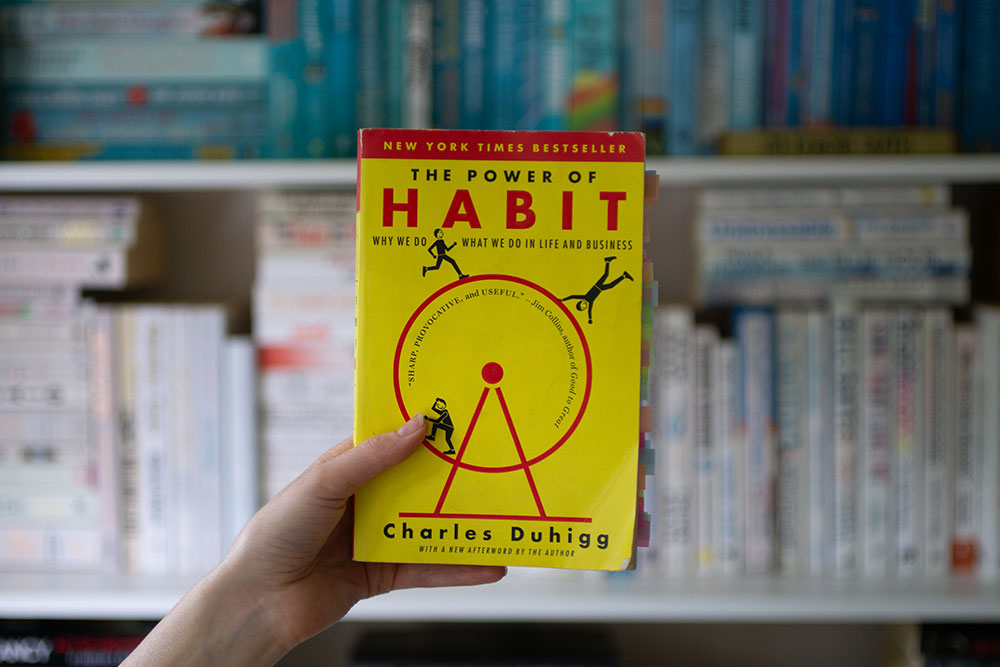
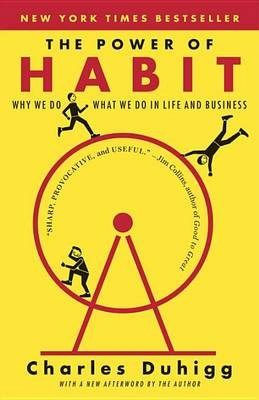
In The Power of Habit Charles Duhigg combines science and storytelling to explain why habits exist and how they can be changed. It revolves around one central argument: Habits can be changed, if you understand how they work.
The book is divided into three parts. Part one focuses on the individual, the second successful companies and the third, societies. In each, case studies are used as a powerful storytelling tool to illustrate the science. This book not only educates you about the neurology of habit formation, but also teaches you how to build new habits and change old ones.
If you’ve ever tried but failed to exercise regularly, lose weight, be more productive or even change the culture in your workplace, this book hands you the keys to do it.
Book Club Notes

This is the first learning book I recall reading. It was before Nutreats, before we did book reviews, before I became a morning person, much less a #morningmovement person. It had a powerful effect on how I view habits, and how every day habits shape the person you become.
Since then, every time I’ve been asked what my favourite book is or for a book recommendation this is the book that comes to mind. Choosing to read it again excited me, but I wondered if it would live up to my memory. Not only has it done that, but I found it even better the second time round.
Charles Duhigg is a magical and talented writer. The way he is able to take a scientific topic and craft it into a story that utterly grips you is unmatched. His writing is as good as the content. This is the OG habit book – a book that every other habit book I have read references. It’s a book for everybody and an absolute must read.
There are so many remarkable things I could share from this book but I’m settling on his framework for reshaping habits.
To understand how to reshape a habit, you first need to understand how habits work. Simplified, habits are a three-step loop containing a cue, a routine and reward. When the reward leads to anticipation and craving, you drive the loop – which over time becomes automatic.
The golden rule of habit change is if you keep the cue and reward, a new routine can be inserted.
How to Reshape your Habits

Identify the routine
Your routine is the most obvious part of your habit loop and the behaviour you want to change.
Experiment with rewards
Rewards satisfy cravings and cravings drive habits. By experimenting with different rewards you can figure out what you’re actually craving.
Isolate the cue
By identifying categories of behavior ahead of time we can scrutinize them to see patterns. Studies have shown that habitual cues fit into five categories:
Location, time, emotional state, other people, immediately preceding action. When an urge hits, write down these five things and after a few days of collected data your cue becomes visible
Have a plan
Design a plan that offers a different routine, is ignited at the cue and delivers the same reward. With practice this will become your new automatic habit.
Charles Duhigg illustrates these concepts and so many more in such an easy to grasp way. If you really want to understand habits better (and change yours), I recommend you pick it up and give it a read.
Read If

You want to transform your life but don’t know where to start.

Rating
Writing -10/10
Applicability – 10/10
Timelessness – 10/10
Shareability – 10/10
The Nitty Gritty

Published by: Penguin Random House
Genre: Non-Fiction, Business, Self Help
Pages: 298
Shop This: Takealot, Amazon Kindle
Similar Reads



A note on our book ratings
Readability: How easy is it to read and understand what the author is saying? Do you need a dictionary or PhD to understand it?
Writing: How well written is the book? Do you find yourself wowed by the writing or unimpressed?
Applicability: How applicable is this book to daily life? Is there enough advice and actions that are easy to start applying?
Timelessness: Is the content of the book timeless or is it something that in a few years won’t have relevance?
Shareability: How likely are you to share the book?