We get more done by focusing on the right things. We will focus on the right things if when we choose what to do, we are in a good state of mind to do so – not fatigued, or distracted or distressed. We will then attend to more of what we want and need to undertake in our lives. If, instead we aimlessly tumble into situations, we’ll attend to much less of what matters.
Page 83
In a nutshell

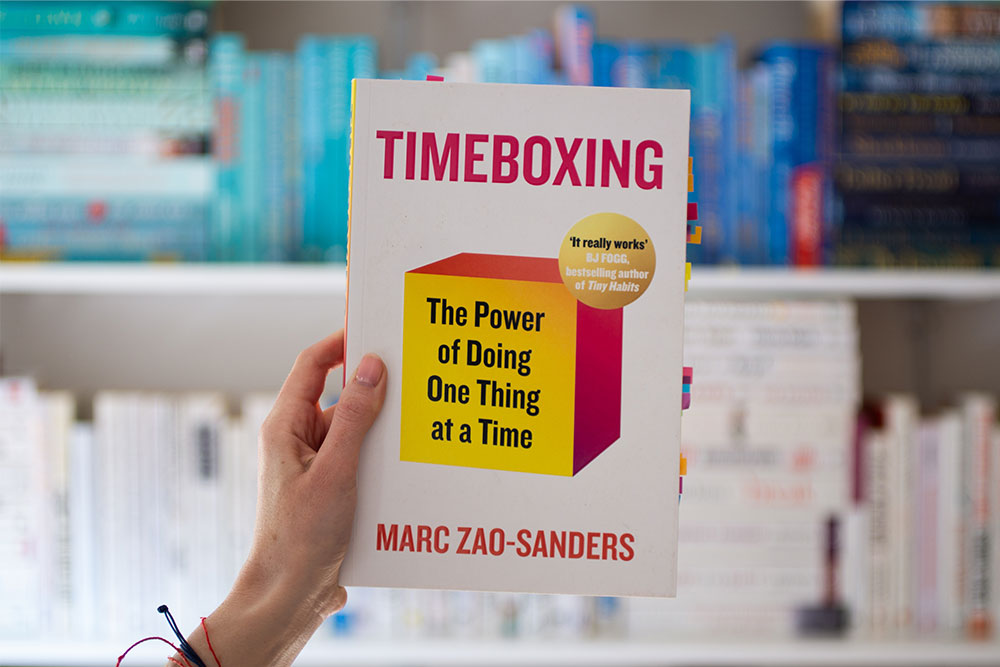
“All we have to decide is what to do with the time that is given to us”. It’s this quote that opens Timeboxing and it succinctly describes what this book is all about. Timeboxing is a time management system that combines your to-do list with a calendar, allowing you to plot out each task. It’s the doing part of a to-do list and allows you to choose what needs to be done, when. In timeboxing, Marc Zao Sands explains timeboxing, why it works and takes you step by step into the method. It’s a book that makes facing the constant stream of tasks and to-do lists more manageable.
Book Club Notes

When this book arrived, Feige took one look at it and said “Zissy, you need to read it”. For longer than I’d like to admit, my days have been a stream of reactions – replying to emails, calls, whatsapps, “fires” – allowing everyone else’s list of things to take over mine. In short, it was a book I desperately needed and one I found in theory to be useful and practical.
I loved that the book was easy to read – each chapter short enough to consume while I drank my morning coffee. Marc Marc Zao Sanders puts a word count and estimated time to read for each chapter which allows you to “timebox ” the book. He not only sells the method, he explains it in a way you can apply, and encourages you to start before you finish the book. So when I say it’s practical in theory, what I mean is that it is practical – if you are able to control your days or most of them. I tried to apply this method to my work life (and am still trying) but have yet to crack the code on how to plan out my day according to my priorities without being distracted by others. That, I think will take time, but I’ll keep trying. When I do find timeboxing brilliant and effective is on weekends/public holidays where I have more control over my time – on those days I am able to look at my to-do list and plot it out on my calendar. I love that by plotting it into times it makes me realistic about what I can achieve, allowing me to get things done and not overcommit to an impractical to-do list and then be upset at the end of the day when I’ve failed to complete it. This is what makes this method most practical – by allocating tasks to timeblocks you actually think about how long things take you.
In short, like he says in the book, it is a process and I’ll keep applying it until I get it right – because when you do get it right, it has the ability to change your life. Timeboxing is a book you don’t read and put away, but one you refer to time and time again.
Time Boxing Basics
The secret to successfully timeboxing is in planning and doing. For planning, he recommends using a digital calendar as it allows you to move things around easily – which helps during days when life happens and unexpected things become priority.
If you want to start timeboxing, below are the summarised steps. For a more in depth guide, I highly recommend getting the book.
Planning

Set time to Time block
You first need to allocate time to go through your to-do list, decide what needs to be done and then allocate time to it. He suggests setting 15-30 minutes aside either first thing in the morning or at the end of the day. I prefer doing this at the end of the day as it allows me to wake up with a plan of action. To make sure you do this, set a daily appointment with yourself. Doing this gives you agency over your decisions, allowing you to do what you want to do.
Review your to-do list
To do lists feed timeboxing, the better your list, the better the timebox. Keep a running list of things you need to do and then allocate them according to priority.
Prioritise
If your to-do list is bigger than what is practically achievable in one day, prioritise the most urgent and important tasks for the start of the day.
Just start
Don’t worry about your timeboxing being accurate – in the beginning you will over and under estimate how long things take you, that’s ok. Start and as you go along you’ll start learning how long things actually take allowing you to timebox better.
Doing
Respect your timeboxes
Start on time and remove distractions so you can do what you intended to do.
Stick to the Plan
Don’t second guess yourself and the decisions you made. Barring an emergency, the order and time you allocated to tasks while in the planning phase is better than what you think you should be doing in the maelstrom of the day.
Good is good enough
Get the job done and don’t let good be the enemy of perfection. Focus on doing a task good enough and finishing on time.
Share as you finish tasks
This brings pressure to get things done on time and to do them well enough to be able to be shared.
When in doubt come back to the calendar
You will get distracted and derailed – that is normal. Don’t let that get to you. Practice returning to your tasks instead of allowing one distraction to derail your day. Over time you’ll see that it’s easier to ignore distractions.
Read If

You want more control over how you spend your days and are looking for a productivity method that actually works.

Rating
Writing -10/10
Applicability – 9/10
Timelessness – 10/10
Shareability – 10/10
The Nitty Gritty

Published by: Penguin Random House
Genre: Non-Fiction, Self Help
ISBN: 978-0-241-65796-6
Pages: 290
Shop This: Takealot, Exclusive Books, Amazon Kindle
Similar Reads



A note on our book ratings
Readability: How easy is it to read and understand what the author is saying? Do you need a dictionary or PhD to understand it?
Writing: How well written is the book? Do you find yourself wowed by the writing or unimpressed?
Applicability: How applicable is this book to daily life? Is there enough advice and actions that are easy to start applying?
Timelessness: Is the content of the book timeless or is it something that in a few years won’t have relevance?
Shareability: How likely are you to share the book?