People don’t naturally think in statistics. They think in stories.
Page 121
In a nutshell

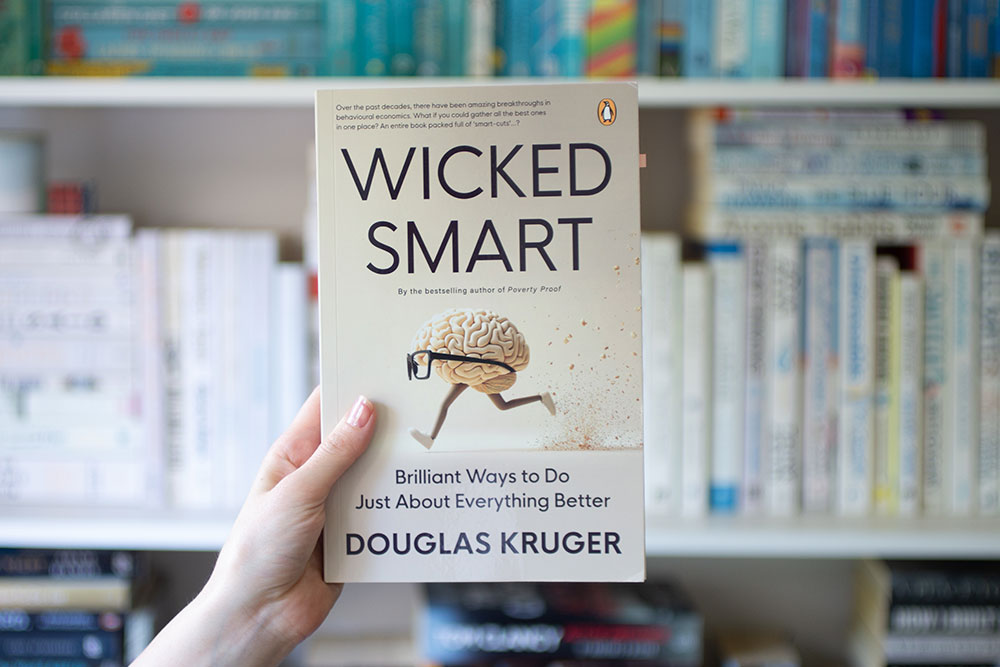
Everything we do starts slowly. Then we learn the principles that allow us to speed things up. Eventually we hit that 80-20 rule. 20% of effort for 80% more effect. These breakthroughs in behavioural economics are called smart-cuts. For centuries, humans have been collecting smart-cuts. The problem is they’re scattered. With Wicked Smart, Douglas Kruger has created a guide to the most useful smart-cuts – each one a bicycle for your mind, that if applied correctly will make you faster, reduce your input and maximise your results.
Book Club Notes

On page 3, Douglas Kruger makes 3 promises to the reader:
- You will not wade through waffles.
- The language will be simple.
- We will cover only the most useful principles.
He keeps all three promises and they are what makes it a great book. He effortlessly takes mounds of information and distills it into digestible and actionable bits that almost seem too obvious. The style gave me James Clear and Ryan Holiday vibes as they all take big ideas and make them easy to grasp and apply. If I have one criticism it is that the book has no chapters. Sections are broken up with headings. I prefer chapters when reading, especially for learning books as it helps orientate you in that section. What is quite delightful is his list at the end which is the TL;DR summary of the entire book.
10 Smartcuts that Stuck with me

Reframing how you see things reveals new options, but it requires admitting you may have been doing it wrong. When you’re in a hole, stop digging.
Good thinking avoids assumptions and rushing ahead. Instead, take a patient pause.
Projects don’t go wrong, they start wrong. Do not rush to commit. Think slow, act fast.
The most effective questions are: What are we really trying to achieve? What if? What else? Why (x5)? What did we learn? What will the human reaction be?
Dark, low-light spaces widen perspective and support creativity, while tight spaces constrict thinking. Wide vistas encourage bigger ideas.
We believe that focus means superior thinking. But unfocused thinking and daydreaming recruit significantly more of the brain. Use breaks to remember, solve problems, or to generate ideas. Ideally they should include a non-demanding task, like walking.
Presentation skills yield the highest career return of any soft skill.
Human relationships matter more than rules. People are more flexible for friends than for strangers.
Talent is built, not born: Talent = yearning + input + deliberate practice, sustained over time.
The worst habits for your brain are too much sitting, lack of socialising, inadequate sleep, and maintaining a state of stress.
Read If

You want to make your life easier and yourself appear (and act) smarter.

Rating
Writing – 8/10
Applicability – 9/10
Timelessness – 9/10
Shareability – 10/10
The Nitty Gritty


Published by: Penguin Random House
Genre: Non-Fiction, Business, Self Help
ISBN: 978-1-77639248-3
Pages: 225
Shop This: Takealot, Exclusive Books, Amazon Kindle
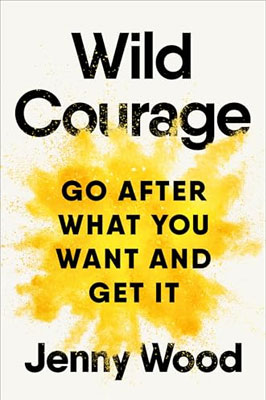
Similar Reads



A note on our book ratings
Readability: How easy is it to read and understand what the author is saying? Do you need a dictionary or PhD to understand it?
Writing: How well written is the book? Do you find yourself wowed by the writing or unimpressed?
Applicability: How applicable is this book to daily life? Is there enough advice and actions that are easy to start applying?
Timelessness: Is the content of the book timeless or is it something that in a few years won’t have relevance?
Shareability: How likely are you to share the book?